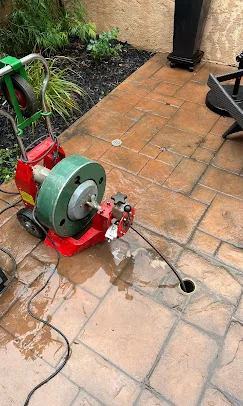
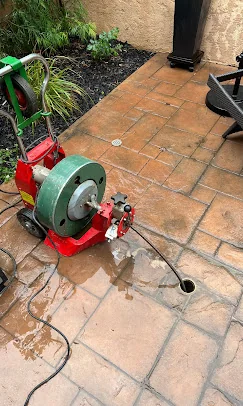
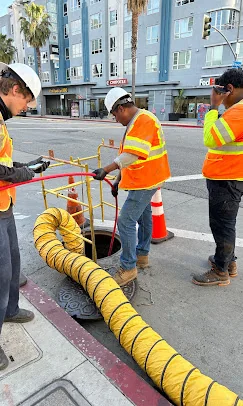
Camera With Measured Location
We run the camera, locate the failure, and record exact depth and distance from the cleanout. You see the footage. No guessing where to dig.
Mainline keeps backing up? Camera shows a break, sag, or root invasion? We dig spot or run trenchless, your call after you see the footage.
TRUSTED BY HOMES & BUSINESSES ACROSS THE SFV
Drain cleaning that doesn’t hold means the line itself is the problem, not the clog. SFV homes built mid-century run a lot of clay sewer line, which cracks at the joints and gets invaded by tree roots. We camera the line so you see exactly what’s wrong, then quote the fix two ways: spot dig (open trench at the failure point) or trenchless (line replacement without tearing up your yard).
The number swings on three things: spot dig vs. trenchless, line depth and length, and what’s on top (lawn, driveway, concrete, mature landscaping). Trenchless costs more per linear foot but saves brutal restoration bills when the line runs under finished surfaces. We camera first and quote both options so you can compare like with like.
Call 818-838-5832 for a same-day camera and quote.
Spot dig vs. trenchless. Spot dig is cheaper and faster for a single failure point. Open a 4x6 trench, swap the bad section, close it back up. Trenchless (pipe burst or CIPP) replaces the whole line without a long open trench. Better when the line runs under a driveway, mature landscaping, or a structure. Rule of thumb: one failure on a sound line, spot dig. Multiple failures or a line at end-of-life, trenchless.
Mainline Failing? Stop Cabling It Every 6 Months. Camera inspection. Real fix. SFV-wide. Call 818-838-5832.
We run the camera, locate the failure, and record exact depth and distance from the cleanout. You see the footage. No guessing where to dig.
When the line is sound except for one failure point, we open a small trench, swap the bad section, restore grade, and backfill. Faster and cheaper than full replacement.
Pipe burst pulls a new line through the old one. CIPP lining rehabs the existing pipe with a cured-in-place resin liner. Both avoid tearing up driveways, mature landscaping, or finished surfaces.
We pull the permit and schedule the inspection in your jurisdiction. The paperwork stays with the property and protects you on resale.
Landscape, hardscape, driveway, or concrete work after the repair gets coordinated through us so you're not chasing a separate contractor for the patch-up.
Tech runs a sewer camera from the exterior cleanout (or a pulled toilet if no cleanout exists) all the way to the city tap or septic. We locate the failure on the screen with you watching. Depth and distance from the cleanout get measured with the camera's locator beacon. 30 to 60 minutes depending on line length and access. You watch the footage live, ask questions, and we mark the failure point on a sketch of the property so you know exactly where the dig will happen.
We sit down with you (kitchen table, tailgate, wherever works) and walk through the two paths: spot dig vs. trenchless. You see the camera footage again, the cost difference between the options, and what each one does to the surface above (lawn, driveway, mature landscaping, hardscape). 15 to 30 minutes. You ask questions, we answer straight. No upselling trenchless when a spot dig handles it. No pretending a spot dig is enough when the line is at end-of-life. You make the call before any permit gets pulled.
Once you approve, we pull the permit with the city or LA County (often same-day in SFV jurisdictions). Dig Alert / 811 gets called for a utility locate so we don't hit a gas, water, or electrical line during excavation. Locates take 2 business days to come back marked. You'll see colored paint on the lawn or driveway showing where utilities run. We schedule the actual repair around the locate window.
Spot dig: open a 4 by 6 foot trench at the marked failure, swap the bad section, restore grade and bedding, backfill in lifts. Trenchless pipe burst pulls a new HDPE line through the old one from access pit to access pit. CIPP lining slips a felt-and-resin liner inside the existing pipe and cures it in place. 4 to 12 hours of no sewer use during the active repair. You'll hear excavation equipment, a generator, or the burst rig running. Stay out of the work zone. Most jobs back in service end of day one.
City inspector comes out and signs off the open trench or trenchless pull before we close it up. Permit gets stamped and stays with your property records on resale. After sign-off we backfill, compact, and coordinate surface restoration: landscape, hardscape, driveway concrete, or lawn replacement. Restoration is its own trade and runs separately, but we schedule it through one point of contact so you're not chasing a second contractor. Total project 1 to 3 days for spot, 2 to 4 days for trenchless with restoration.
Call now for fast, upfront-priced service across the San Fernando Valley and Los Angeles.
If the line backs up more than once a year, get a camera inspection. Recurring backups = the line itself is failing (cracks, sags, root intrusion, scale buildup). Cleaning the same line over and over is throwing money at a band-aid.
Trenchless replaces or rehabs the sewer line without digging a long open trench. Two main methods: pipe burst (pulls a new pipe through, breaking the old one) and CIPP lining (slips a resin liner inside the existing pipe, cures in place). Worth it when the line runs under a driveway, mature trees, or other expensive surfaces.
Most homeowner's policies don't cover sewer line replacement (it's considered maintenance). Some cover the resulting damage from a backup. Some carry an optional 'service line' rider that does cover the line. Check your policy.
Yes. Sewer line repairs in LA County and SFV cities require permit and inspection. We pull it. The permit and inspection paperwork stays with your property and protects you on resale.
Spot dig: typically 4-12 hours of no sewer use during the repair itself. Trenchless: similar. Most jobs you're back in service end of day one. Full line replacement with restoration: 1-3 days.