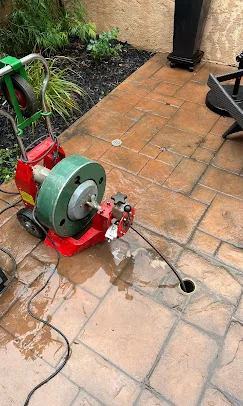
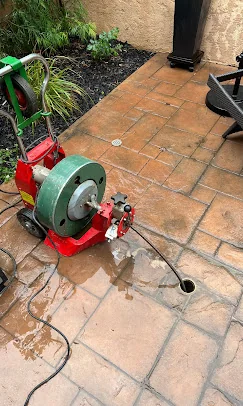
Commercial-Grade 3,500-4,000 PSI
Real commercial jet equipment with rotating and penetrating nozzles, not a rented residential unit. The pressure that actually scours a grease or root-bound line.
Cabling didn't hold. Grease keeps coming back. Roots regrew. Hydrojetting scours the pipe wall back to bare metal.
TRUSTED BY HOMES & BUSINESSES ACROSS THE SFV
Hydrojetting is high-pressure water (3,500+ PSI) that scrubs the inside of your drain line clean, not just punching a hole through the clog like cabling does. It’s the standard for restaurants, commercial kitchens, and any line with grease, scale, or root buildup. If your line keeps clogging despite repeated cabling, hydrojetting is what you actually need.
Hydrojet pricing scales with line size, line length, scale or grease level, and residential vs. commercial spec. Restaurant grease lines on a maintenance schedule run different from a one-off residential mainline scour. We assess the line and quote a flat rate per visit before we drop a hose.
Call 818-838-5832 for a same-day jet quote.
Cabling vs. hydrojetting. Cabling is a steel auger. It punches a hole through the clog and leaves the buildup on the pipe wall. Cheap. Fast. Works for one-off residential clogs. Hydrojetting is high-pressure water that scours the pipe wall completely clean. More expensive per service, but the line stays clear way longer. For grease, roots, scale, and recurring clogs: jet, don’t cable. For a single soft clog: cabling is fine.
Cabling Didn’t Hold? Time to Jet. Camera-verified before and after. SFV-wide. Call 818-838-5832.
Real commercial jet equipment with rotating and penetrating nozzles, not a rented residential unit. The pressure that actually scours a grease or root-bound line.
When line condition is uncertain, we camera first. Avoids running high-pressure water through a pipe that's already cracked or compromised.
Grease, mineral scale, soap buildup, root tendrils, and soft scale come off the pipe wall. Cabling punches a hole. Jetting cleans the whole interior.
After the jet, we run the camera again so you see the line is actually clean. No 'trust us, it's done.' You watch the footage.
Based on your line, usage, and what we saw on camera, we tell you when you'll realistically need the next jet. Restaurants weekly to monthly. Residential, often years.
Tech locates the cleanout (exterior, roof, or pulled fixture), assesses line size and material, and asks about history: how often does it back up, when was the last cabling, any prior camera footage. 10 to 20 minutes. Older clay or cast iron lines get a quick camera pass first to check structural integrity, because high-pressure water through an already-cracked pipe makes things worse, not better. PVC and ABS in good shape go straight to jet. You walk the property with the tech and confirm where access happens.
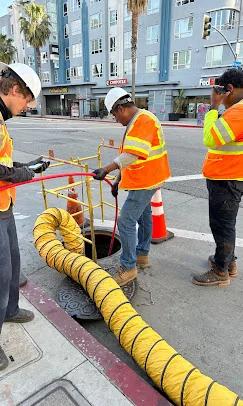
Jet truck gets positioned with hose run to the cleanout. Tarps and floor protection go down on any indoor access. Splash containment around the cleanout itself, because water and debris come back out under pressure when the nozzle hits the clog. Nozzle selection happens here: penetrating warthog for breaking through a hard clog, rotating chain or root cutter for grease and root masses, flushing nozzle for general scour. 15 to 25 minutes of setup. Stay out of the immediate work area. Other rooms are fine.
Hose runs out the full length of the line under 3,500 to 4,000 PSI water pressure. Jet pulls itself forward through the line, scours the pipe wall, and washes debris back toward the cleanout. Tech works the hose in and out repeatedly to scrub the entire pipe interior, not just punch through. 45 minutes to 2 hours depending on line length, line size, and how bad the buildup is. You'll hear the truck running and water moving. Stay clear of the cleanout opening, debris sprays back when the nozzle hits a heavy section.
After the jet, tech runs the sewer camera through the cleaned line and you watch the footage on the screen. You see clean pipe wall, scoured grease lines, root tendrils washed away, mineral scale gone. If the camera shows any structural issues that the buildup was masking (a sag, a cracked joint, root intrusion through a pipe wall), we pause and walk you through what's there and what to do about it. 15 to 30 minutes. No 'trust us, it's clean.' You see it for yourself.
Tech recommends a realistic re-service window based on what we saw: restaurant grease lines monthly, multi-unit risers 6 to 12 months, residential mainlines often 1 to 2 years. You decide whether to schedule recurring maintenance or wait for the next call. Cleanup takes 10 to 15 minutes: tarps up, floor wiped, splash containment removed, equipment loaded. Written service record gets left on-site or emailed. Total visit usually 90 minutes to 3 hours start to finish.
Call now for fast, upfront-priced service across the San Fernando Valley and Los Angeles.
Properly done, no. Modern jets and trained operators don't damage sound pipe. The risk is on already-failing pipe (cracked clay, severely corroded cast iron). That's why we camera first when we're not sure of pipe condition. If the line is too compromised, we recommend repair instead of jetting.
Most full-service restaurants: monthly grease line jet. Lighter food prep (cafés, bakeries): quarterly. Higher volume or fryer-heavy operations: bi-weekly. Health inspectors love documented monthly maintenance.
Hydrojet first. It's a maintenance and clearing tool. Trenchless lining (CIPP) is a structural fix for a damaged pipe. If the camera shows clean pipe with just buildup, jet it. If the camera shows cracks, root intrusion through pipe walls, or a sag, you need repair (lining or replacement). Not just jetting.
Rented residential units (1,500-2,000 PSI) won't touch real grease or roots. You'll waste a Saturday and the line will still be clogged. Real commercial jets (3,500+ PSI) require training to use safely. Hire it out.
Depends on usage. Residential mainline with mature trees: 1-2 years. Restaurant grease line: 4-8 weeks (which is why monthly maintenance is the standard). Multi-unit mainline: 6-12 months. We give you a realistic re-service window after we see your camera footage.